
一、 Project Background
This project involved tack welding a 316L stainless steel high-purity tube to a flange. The tube thickness was 1.6mm, welded by TIG at 39A using 0.8mm filler wire. High-purity argon was used for back purging to keep the weld interior clean and oxidation-free.
二、Welding Parameters
| Item | Specification |
|---|---|
| Process | TIG (GTAW) |
| Material | 316L Stainless Steel |
| Tube Thickness | 1.6 mm |
| Welding Current | 39 A |
| Filler Wire Diameter | 0.8 mm |
| Number of Tack Welds | 8 |
| Tack Weld Distribution | Evenly spaced, symmetrical layout |
| Back Purge | High-purity Argon (≥99.999%) |
| Flange Protection | Aluminum foil to prevent scratches |
三、Preparation
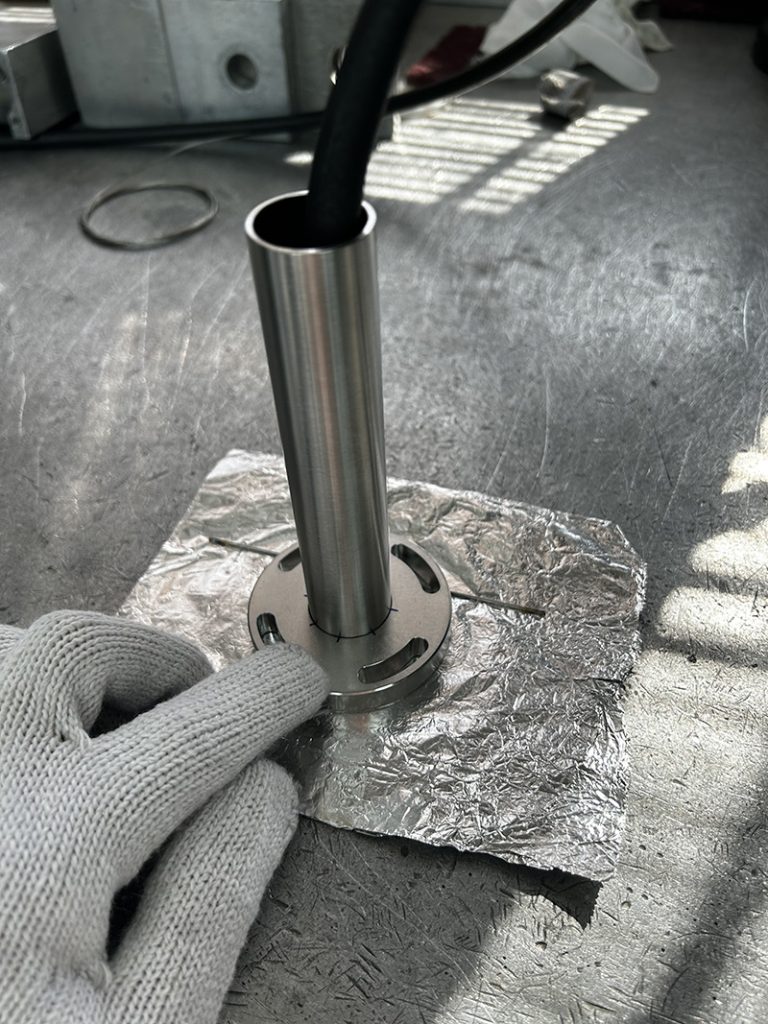
Before welding, both the tube and flange surfaces were thoroughly cleaned.
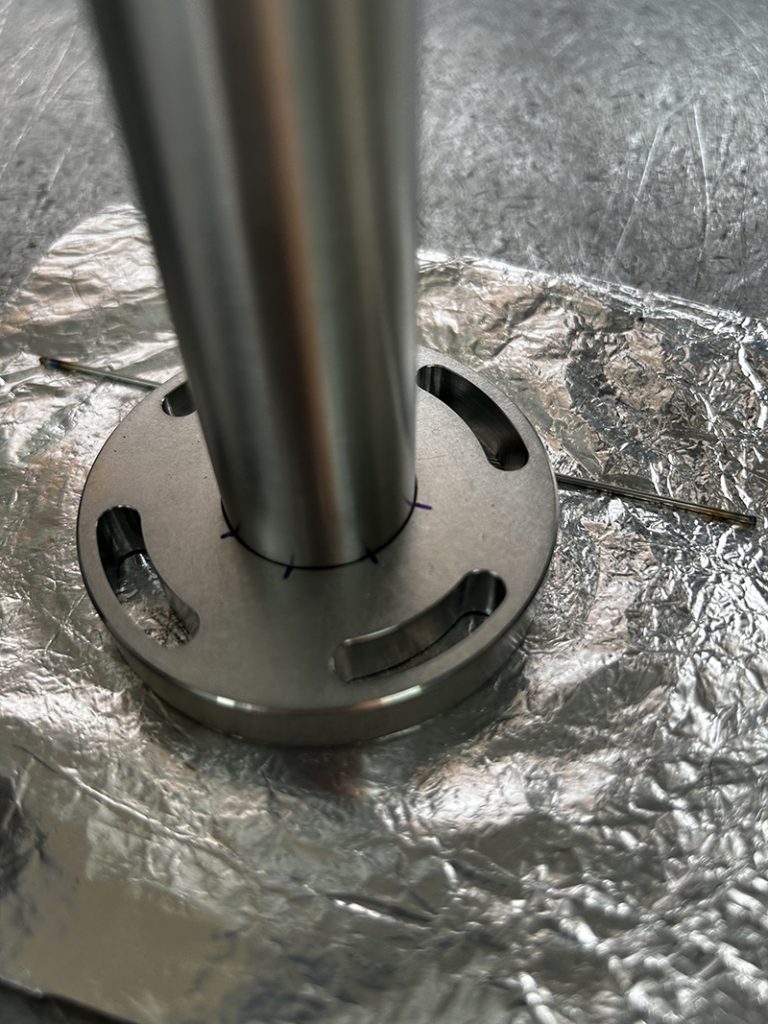
To simplify alignment, eight tack weld positions were marked on the flange with a marker pen, ensuring even spacing and accurate positioning during welding.
An aluminum foil sheet was placed under the flange to prevent scratches during setup.
四、Tack Welding Process
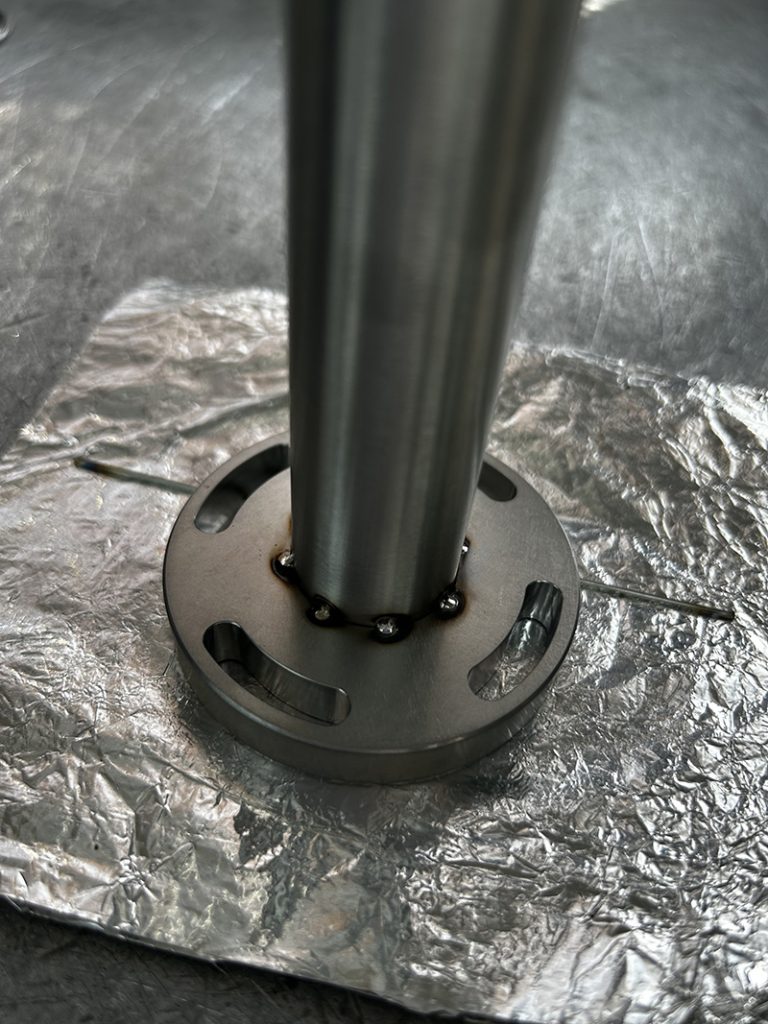
Eight evenly spaced tack welds were made in a diagonal sequence to balance heat and minimize distortion.
Using 39A with 0.8mm filler wire, each tack was small, smooth, and fully fused without protruding inside the tube.
五、 Back Purge Protection
During welding, ultra-high purity argon (99.999%) was continuously supplied inside the tube for back purging.
This inert gas shield kept the root bright and free from oxidation, a crucial step in high-purity welding.
六、Results and Summary
The welds were evenly distributed, smooth, and oxidation-free. The flange and tube remained perfectly aligned, with a clean, bright root surface.
In summary:
- 39A + 0.8mm wire works perfectly for 1.6mm 316L tubing;
- Marking 8 tack points beforehand improves accuracy and balance;
- Aluminum foil protection prevents cosmetic damage;
- Continuous back purging ensures perfect weld cleanliness.